Laid-Back Camp (Yurucamp) Real Locations Guide
Laid-Back Camp (ゆるキャン△, C-Station, 2018) is about as good as anime pilgrimage tourism gets. Where a lot of guides in this genre have to hedge — “fans believe,” “possibly inspired by,” “the studio has never confirmed” — this one mostly doesn’t. The author did on-site research at real campsites before drawing them, and several of those campsites have since run official collaborations with the series. That combination (confirmed source material plus active, ongoing tie-ins) is rare, and it’s exactly why Laid-Back Camp has become one of the most-visited anime pilgrimage franchises in Japan.
It’s also a near-perfect fit for practical travel content: every location in this guide is a real place you can actually book a night at or hike, which means natural, non-forced tie-ins to camping-gear guides and campsite-booking content — the kind of thing readers researching this trip are already looking for. (No affiliate links exist yet; see the placeholder note near the end.)
Below are the three most important real-world locations, all clustered around the Lake Motosu / Fujinomiya area of Yamanashi and Shizuoka, roughly southwest of Mt. Fuji.
Koan Campsite (浩庵キャンプ場) — Lake Motosu Official
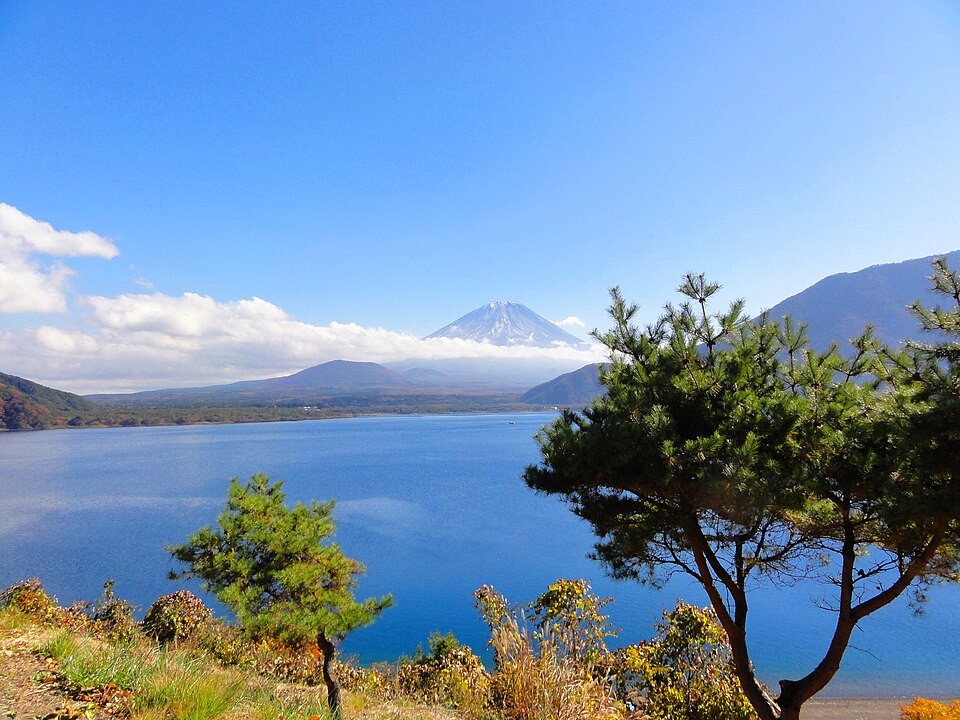 Photo: funk bass, via Wikimedia Commons (CC BY 3.0). Source.

What it is: A small, privately-run campground directly on the shore of Lake Motosu (本栖湖), one of the Fuji Five Lakes, in Minobu Town, Minamikoma District, Yamanashi Prefecture. This is the most iconic Laid-Back Camp location — the lakeside tent pitches with Mt. Fuji visible across the water are drawn directly from this site.
Confirmation status: Officially confirmed. The author visited and researched Koan Campsite directly while working on the series, and the campsite has run official Laid-Back Camp collaboration events and merchandise tie-ins. This isn’t a fan-matched location — it’s acknowledged on both sides.
Coordinates: 35.473189, 138.574807
How to get there: There’s no direct public transit to the campsite itself. The most common route is by car, roughly 25 minutes from Kawaguchiko Station. A taxi from the same station works if you’re not driving, but expect a real fare for that distance — arrange a return pickup in advance if you go that way, since taxis don’t wait around at the campsite.
Visitor etiquette: This is the one thing every guide to Koan Campsite needs to say clearly: it is a real, privately-run, paying campground, not a public lakeside park you can wander into for photos. Entry requires paying the campsite’s standard fee, whether you’re staying overnight or just visiting for the day (day-use terms vary, so check current site rules before assuming you can drop in for free). Once inside, remember that most people there are paying customers there to actually camp — not extras in your pilgrimage photos. Keep noise down near occupied sites, don’t set up a tripod in the middle of someone’s pitch, and treat the shoreline the way you’d want a stranger to treat your own campsite.
Fumotoppara Campsite (ふもとっぱらキャンプ場) Official
What it is: A large, open grassland campground in Fujinomiya City, Shizuoka Prefecture, known for its wide-open field setting with Mt. Fuji as a backdrop. It appears in the series as another of the group’s real camping destinations, distinct in character from the more intimate lakeside setting at Koan.
Confirmation status: Officially confirmed, for the same reason as Koan — direct on-site research by the author and official series collaborations tied to the campsite.
Coordinates: 35.400423, 138.561222
How to get there: By car, it’s about 15–20 minutes from Lake Motosu, making it easy to pair with a Koan Campsite visit on the same trip. If you’re driving from further away, the nearest expressway access points are the Fuji IC or Shin-Fuji IC, both on the Tomei/Shin-Tomei expressway network. As with Koan, a car is effectively required — this is not a walk-in or train-accessible location.
Visitor etiquette: Same rule as Koan: this is a paid, privately-run campground, not a free photo-op field. Fumotoppara is also actively run as a conservation project, maintaining its open grassland environment on purpose rather than letting it revert to forest — that upkeep is part of what you’re paying the entry fee for. Stick to designated paths and pitches, don’t trample the grass outside marked areas to get a clean drone shot, and again: the people camping there are guests, not scenery.
Mt. Tenshi (天子ヶ岳) Official
What it is: A real mountain in Fujinomiya City, Shizuoka Prefecture, near the Lake Tanuki / Asagiri Highlands area. Unlike the two campsites above, this is a hiking location rather than a place to pitch a tent — it’s depicted directly in the story as a setting area the characters pass through or camp near.
Confirmation status: Officially confirmed as a location depicted in the series.
Coordinates: 35.329167, 138.536667
How to get there: The trailhead is reached via the Lake Tanuki / Asagiri Highlands area, and a car is effectively required to get there — there’s no convenient train or bus link to the trailhead itself. From there, it’s a genuine hiking trail, not a paved walking path, so treat it accordingly: proper hiking shoes, layered clothing, water, and a realistic sense of your own fitness and experience level.
Visitor etiquette and safety: This is real mountain terrain, and it deserves the same respect any hiking trail does, anime connection or not.
- Plan your route according to your actual hiking experience and physical condition — don’t take this on as a first-ever hike because a show made it look appealing
- Filing a hiking plan (登山届) is a good idea if the trailhead area supports it, especially if you’re heading out solo or outside peak season
- Pack out everything you bring in — there’s no trash collection on the mountain
- Follow standard trail etiquette: yield appropriately to other hikers, stay on the marked trail, and don’t take shortcuts that cause erosion
Planning a visit: campsites first, mountain second
If you’re building a trip around this guide, the two campsites pair naturally — Koan and Fumotoppara are close enough to visit back-to-back, and both take reservations that fill up on weekends and during peak fall/winter camping season (the anime itself is partly known for popularizing cold-weather camping). Mt. Tenshi is a separate, standalone outing that requires actual hiking preparation, not something to squeeze in as an afterthought on the same day as setting up camp.
(Campsite booking links and gear affiliate links will be added here once the relevant partner programs are active.)
FAQ
Are the Laid-Back Camp locations actually real, or is this fan speculation like some other anime pilgrimage spots? They’re genuinely, officially confirmed. The author did on-site research at these campsites before drawing them, and Koan Campsite and Fumotoppara Campsite have both run official collaborations with the series. This is one of the best-documented cases in anime tourism, not a fan-matched guess.
Can I just walk into Koan Campsite or Fumotoppara Campsite to take photos? No. Both are privately-run, paying campgrounds. You need to pay the site’s entry/camping fee to enter, and you should be considerate of the paying campers actually there to camp — they aren’t part of the scenery.
Do I need a car to visit these locations? Yes, for all three. There’s no direct public transit to Koan Campsite (about 25 minutes by car from Kawaguchiko Station) or Fumotoppara Campsite (15–20 minutes by car from Lake Motosu, near the Fuji IC / Shin-Fuji IC), and the Mt. Tenshi trailhead is also reached via car through the Lake Tanuki / Asagiri Highlands area.
Is Mt. Tenshi a serious hike, or a casual walk? Treat it as a real hiking trail requiring proper gear and preparation — hiking shoes, appropriate clothing, water, and a route matched to your experience level. It’s not a paved sightseeing path.
Can I visit Koan Campsite and Fumotoppara Campsite in one day? Yes — they’re only about 15–20 minutes apart by car, and pairing them is a common way to see both of the series’ best-known campsite locations in a single trip.
Is the best time to visit tied to a particular season? The series is closely associated with cold-weather solo camping, so late autumn and winter are popular times to visit for atmosphere, but both campsites operate across multiple seasons — check current site availability and weather conditions before booking, especially for winter camping at altitude.
Sources: publicly available information on Koan Campsite’s and Fumotoppara Campsite’s official collaborations with Laid-Back Camp, and general reporting on the author’s on-site research for the series. Coordinates, access routes, and current fees should be verified directly against each campsite’s official information before traveling, since camping fees, reservation systems, and seasonal access can change.