Your Name (Kimi no Na wa) Real Locations Guide
Your Name (君の名は。, 2016, dir. Makoto Shinkai) is the rare pilgrimage case where the “is this really the place?” question has a mostly confirmed answer. Unlike some anime tourism spots built entirely on fan speculation, several of this film’s key locations are documented, real, physical places — and one city has openly built its tourism identity around the connection.
Here’s a complete, honest breakdown of what’s confirmed, what’s likely, and what’s still genuinely debated.
Suga Shrine, Tokyo — the real staircase from the ending Official
What it is: A small Shinto shrine in Yotsuya, Shinjuku (〒160-0018 Tokyo, Shinjuku-ku, Sugacho 5-6). The steep stone stairway leading up to the shrine’s torii gate is the exact staircase drawn for the film’s emotional final scene — this isn’t a “similar-looking” stand-in, it’s the real, specific location the animators referenced.
How to get there: About a 7–10 minute walk from Yotsuya, Shinanomachi, or Yotsuya-sanchome stations (all on different lines, so pick whichever connects best to your route).
Visitor notes: This is a working shrine on a narrow residential street, not a tourist attraction built for crowds. The stairs and the street below them are genuinely tight — please keep foot traffic moving, especially since fans regularly queue for the same photo angle, and be mindful that this is also just… someone’s neighborhood. Private homes line the approach; stay on the public street and shrine grounds only.
Hida-Furukawa, Gifu — the town that became Itomori Official
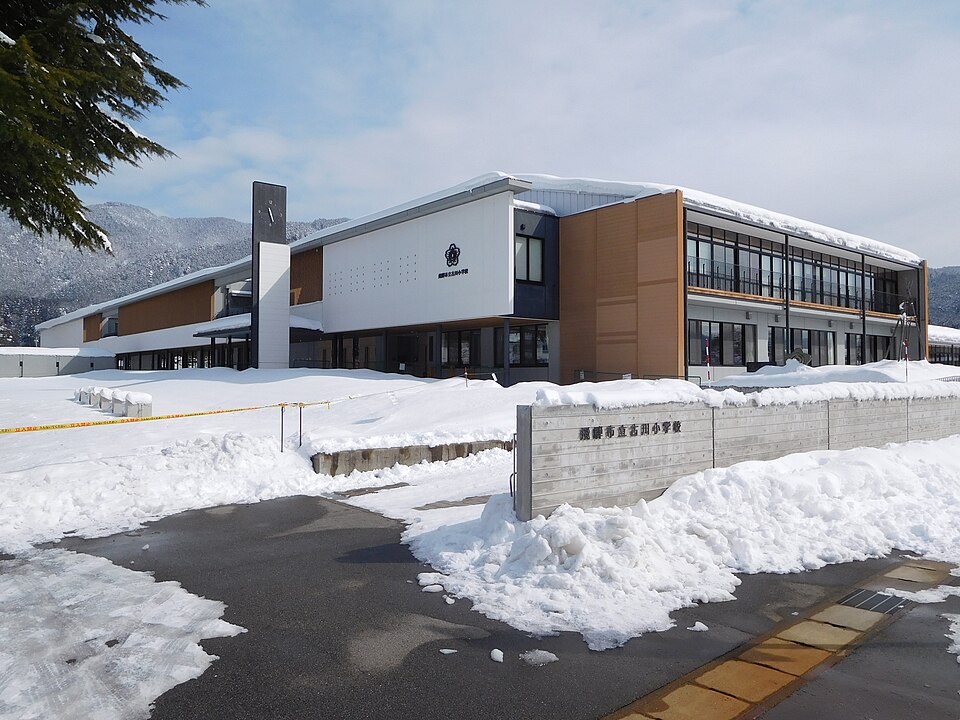 Photo: Miyuki Meinaka, via Wikimedia Commons (CC BY-SA 4.0). Source.

The fictional town of Itomori (糸守町), where the film’s heroine Mitsuha lives, isn’t modeled on one single real place — but its streets, station, and daily-life atmosphere draw heavily and openly on Hida-Furukawa, a small town in Hida City, Gifu Prefecture. This is the most “officially embraced” location in the film: Hida City’s own tourism board actively promotes the connection and has built self-guided pilgrimage routes around it, unlike locations where the link is purely a fan theory.
Key spots within Hida-Furukawa:
Hida-Furukawa Station — where the film’s Tokyo-based protagonist Taki first arrives searching for Mitsuha’s town. Reachable via limited express train from Takayama or Toyama.
The old town’s white-walled storehouse street along the Seto River — the canal-and-carp streetscape that gives the town its distinctive look in the film. This is a compact, walkable historic district, easy to cover in an hour or two on foot.
Keta Wakamiya Shrine (気多若宮神社) — about a 14-minute walk from Hida-Furukawa Station, at 岐阜県飛騨市古川町上気多1297. This is believed to be one of the real references for the long shrine staircase where Mitsuha and her sister perform the ritual dance as shrine maidens. It’s a genuinely old, high-status shrine (one of Hida’s “Ten Great Shrines”), and its Furukawa Festival (April 19–20) — famous for taiko drumming and float processions — is UNESCO-registered as part of Japan’s intangible cultural heritage. If you’re visiting during the festival, expect serious crowds; if you’re visiting for a quiet photo of the steps, avoid those two days entirely.
The crater lake: the Lake Suwa theory, and what Shinkai actually said
This is the part most pilgrimage guides get slightly wrong, so here’s the more careful version.
The internet’s most repeated claim is that Itomori’s crater lake was modeled on Lake Suwa (諏訪湖) in Nagano Prefecture, and Lake Suwa’s own tourism material happily promotes this. It’s a reasonable guess — Lake Suwa does sit in a basin with a comparable shape and scale — but it isn’t the whole story.
Shinkai himself has said his earliest visual reference for the lake was actually a pair of much smaller lakes — Matsubara-ko and Otsuki-ko in Koumi Town, Nagano — before the design evolved into something more original for the film. Lake Suwa likely fed into the later look as well, but treating it as the confirmed model overstates a connection that Shinkai has described in more mixed terms.
Bottom line: if you visit Lake Suwa expecting an exact match to the film, temper your expectations — it’s a real and beautiful lake with a genuine (if partial and evolving) connection to the film’s inspiration, not a 1:1 filming location like Suga Shrine.
Suggested route
If you’re combining this with a Tokyo–Takayama–Hida trip:
- Tokyo: Suga Shrine (Yotsuya) — easily combined with a Shinjuku/Yotsuya day
- Hida-Furukawa: Station → old town canal street → Keta Wakamiya Shrine (allow half a day)
- Optional extension: Lake Suwa, if you’re already routing through Nagano — go for the lake itself, not as a guaranteed “movie-accurate” photo stop
FAQ
Is Suga Shrine really in Your Name? Yes — this is one of the most reliably confirmed real locations in anime pilgrimage tourism. The staircase is the actual place referenced for the film’s ending scene, not a fan guess.
Is Hida-Furukawa officially the model for Itomori? The townscape (streets, station, general atmosphere) draws heavily on Hida-Furukawa, and Hida City’s tourism board actively promotes the connection. It’s not a claim invented by fans after the fact — but Itomori itself is a fictional composite, not a literal 1:1 copy of the real town.
Is Lake Suwa the real Itomori Lake? It’s the most popular theory and the connection is often repeated as fact, but Shinkai has cited other, smaller lakes (Matsubara-ko and Otsuki-ko in Koumi Town) as an early visual reference too. Treat Lake Suwa as “the closest real match many fans and local tourism boards point to,” not as a confirmed 1:1 source.
How do I get to Hida-Furukawa from Tokyo? Shinkansen to Toyama or Takayama, then a limited express or local train to Hida-Furukawa Station. Budget a full day if you’re coming from Tokyo and want time to actually walk the old town.
When should I avoid visiting Keta Wakamiya Shrine? April 19–20, unless you specifically want to experience the Furukawa Festival — it’s spectacular, but it’s the opposite of a quiet photo opportunity.
Sources: Hida City official tourism materials on Your Name pilgrimage routes, Japanese-language reporting on Keta Wakamiya Shrine and the Furukawa Festival, and director Makoto Shinkai’s own comments on the lake’s visual references. Suga Shrine’s address and access details verified against the shrine’s public location information. As with any pilgrimage guide, verify current opening hours and festival dates before traveling.